Wondering whether you should build or buy in The Village at Lake Chelan? If you are shopping from the Seattle area or planning a second home in Chelan, that choice can shape your timeline, budget, and day-to-day experience more than you might think. The good news is that The Village offers a fairly clear tradeoff: buying existing usually gives you speed and simplicity, while building gives you more control if you are comfortable with approvals and extra moving parts. Let’s dive in.
The Village at a glance
The Village at Lake Chelan is an established 107-unit residential community in unincorporated Chelan County, completed around 2005. It is not a brand-new subdivision with wide-open development options. Instead, it is a mature HOA neighborhood with shared amenities, existing homes, and a limited number of remaining lots.
The 2025 reserve study shows the HOA includes a community pool, two covered patios, a restroom and equipment building, asphalt roads and parking, landscaping, fencing, drainage, and irrigation components. The same study says the association was 80% funded at year-end 2025 and assessed as low risk for a special assessment. For many buyers, that adds a layer of predictability when comparing this community to less established neighborhoods.
Buying existing is usually faster
If your main goal is to start enjoying Lake Chelan sooner, buying an existing home in The Village is often the easier path. You can evaluate a finished product, understand the layout and condition, and move through a more familiar purchase process instead of managing a construction timeline.
An active example in the community is 210 Village Drive, listed at $590,000 with 3 bedrooms, 2 bathrooms, and 1,987 square feet. The listing notes HOA dues of $130 per month, access to the community pool, and HOA lawn mowing. For second-home buyers, that combination can be appealing because it reduces some of the exterior maintenance burden.
You also avoid several build-related hurdles. When you buy an existing home, you are not starting with an ARC packet, contractor scheduling, a performance deposit, or Chelan County permit sequencing. That does not mean ownership is friction-free, but it does mean you skip the most time-sensitive parts of starting from scratch.
Building gives you more control
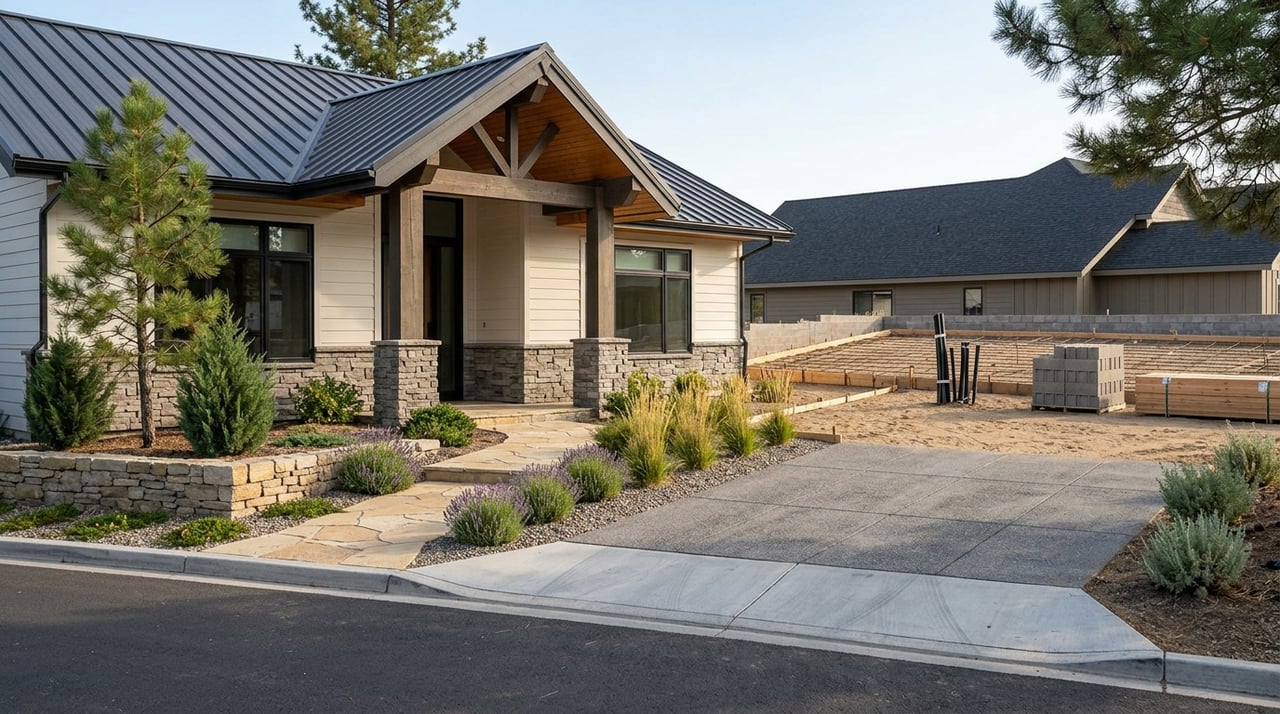
Building in The Village can make sense if you want a specific floor plan, finish level, or layout that existing inventory does not offer. It can also be a good fit if you are comfortable making decisions, working through approvals, and waiting longer for the finished result.
One active lot example is 516 Village Drive #60, listed at $199,000 for 0.11 acres. The listing says utilities are already established, including water, sewer, power, and fiber, and notes that plans for a two-story home are available. That setup can make a build feel more approachable than starting on raw land, but it is still not the same as buying a completed home.
The biggest advantage of building is customization. You can shape the home around how you plan to use it, whether that means maximizing sleeping space, prioritizing low-maintenance finishes, or creating a layout that works better for a vacation-home lifestyle.
Building comes with real HOA steps
In The Village, building is not an anything-goes process. The HOA’s Architectural Review Committee, or ARC, has specific standards for new homes and exterior modifications, and approval is required before work begins.
The ARC can deny plans based on placement, materials, size, color, harmony, durability, or nonconformance with the CC&Rs. The initial review is a 30-day process once the application is complete. Construction cannot begin until ARC approval has been granted and Chelan County permits have been issued.
There are also upfront costs and timing issues to plan for. The HOA rules require a $5,000 performance deposit plus a $500 ARC review fee before the ARC approves plans, and the 30-day review clock does not start until the deposit is received. The contractor code also limits work hours, prohibits Sunday work without written permission, and requires cleanup and site control.
For some buyers, those steps are manageable and worth it. For others, especially out-of-area second-home buyers, they add enough friction to tip the decision toward buying existing.
Design flexibility has limits
You can customize a home in The Village, but the freedom is structured. ARC standards require one single-family dwelling plus one garage per lot. Manufactured and mobile homes are prohibited, and there is a 1,200-square-foot minimum living area.
The standards also regulate garages, roof pitch, fencing, landscaping, and exterior materials. That means you are building within a defined neighborhood look and feel, not creating a totally custom concept with no guardrails. If that consistency appeals to you, the rules may feel helpful. If you want broad design freedom, this may not be the right setting.
Chelan County adds another approval layer
Beyond HOA review, Chelan County has its own requirements for residential building permits. Applications will not be accepted until required items are satisfied, including deed and legal description, legal access, site plans, water and sewer availability letters or well and septic approvals, and any required critical-area review items.
The county also states that critical-areas review may be required for land within, likely within, or adjacent to protected buffers, even if a county permit is not otherwise required. In practical terms, that means buyers should not assume a lot is ready to build simply because utilities are nearby or plans are available. You still need to verify the approval path.
This is one reason lot purchases can look simple at first glance but involve more coordination than expected. If you are comparing build versus buy, county process is part of the real equation.
Existing homes can still be competitive
Price is important, but it is not the only factor. In The Village, current and recent listings suggest that finished homes can land in a competitive range depending on size and scope.
For example, 557 Village Drive sold for $525,000 in 2025 as a 3-bedroom, 2-bath, 1,203-square-foot home. Compared with the active 210 Village Drive listing at $590,000 and 1,987 square feet, that sale shows how completed homes in the community can vary by size and value without necessarily putting building at a huge pricing advantage.
That matters because a build budget is not just lot price plus construction. You also need to factor in approval timelines, HOA deposits and fees, and the uncertainty that can come with scheduling and completing a home. For many buyers, the practical question is less about headline price and more about whether customization is worth the extra time and effort.
HOA rules matter either way
Whether you build or buy, you are stepping into a neighborhood with clear rules. The Village is better understood as a managed, amenity-focused community than a blank-slate subdivision.
Street parking is prohibited. RVs, boats, trailers, motor homes, snowmobiles, and utility trailers must be stored in the garage or outside the Village boundaries. Guest parking has placard rules, quiet hours run from 10 p.m. to 7:30 a.m., fireworks are banned, and signs are controlled.
Owners also need to maintain landscaping, and the association may maintain neglected landscaping and assess the cost. Portable exterior A/C units are not allowed, and pets are limited to two and must be leashed in common areas. These details can be a benefit if you want a tidy, consistent environment with less exterior upkeep, but they can feel restrictive if you expect more flexibility.
Buying existing does not eliminate approvals
One common misconception is that buying an existing home means you are done dealing with HOA approval. In The Village, many exterior changes still need ARC approval even after closing.
That includes fences, hot tubs, sheds, landscaping, grading, patios, decks, retaining walls, play structures, walkways, awnings, generators, and driveway changes. So if your plan is to buy a house and quickly rework the exterior, you still need to account for review time and design rules.
This is an important middle ground. Buying existing is generally easier than building, but it is not the same as buying in a neighborhood with minimal oversight.
Which path fits your goals?
For most buyers, the decision comes down to speed versus control. If you want to spend less time managing process and more time enjoying the home, buying existing is usually the better fit in The Village. You can move faster, understand what you are getting, and avoid the front-end work of approvals and construction.
If you want a specific plan and are comfortable with HOA standards, county permitting, and a more hands-on timeline, building can still be a smart option. The remaining lot opportunities and established utilities can make that route attractive for buyers who are patient and clear about what they want.
For many Seattle-area second-home buyers, this is the real question: do you value immediacy and simplicity more, or do you value customization enough to accept the extra process? In The Village at Lake Chelan, that is usually the deciding factor.
If you are weighing lots versus finished homes in The Village or anywhere around Lake Chelan, working with a local advisor can help you compare the real tradeoffs, not just the list prices. For tailored guidance on second homes, lots, and lifestyle property in the Chelan Valley, connect with Nick Bowler.
FAQs
Is The Village at Lake Chelan a new construction neighborhood?
- No. The Village is an established 107-unit community completed around 2005, with existing homes, shared amenities, and a limited number of remaining lots.
What does building in The Village at Lake Chelan require?
- Building requires ARC approval before work starts, a $5,000 performance deposit, a $500 ARC review fee, and all required Chelan County permits.
Why might buying an existing home in The Village at Lake Chelan be easier?
- Buying existing usually offers a faster, lower-friction path because you avoid the initial ARC packet, contractor deposit, and county permit sequence tied to new construction.
What HOA amenities are included in The Village at Lake Chelan?
- The 2025 reserve study identifies a community pool, two covered patios, a restroom and equipment building, roads and parking, landscaping, fencing, drainage, and irrigation components.
Can you make exterior changes after buying in The Village at Lake Chelan?
- Yes, but many exterior changes still require ARC approval, including items like fences, decks, patios, hot tubs, sheds, grading, and driveway changes.
What rules should second-home buyers know about in The Village at Lake Chelan?
- Key rules include no street parking, storage limits for boats and trailers, quiet hours, pet limits, landscaping upkeep requirements, and restrictions on certain exterior items and modifications.