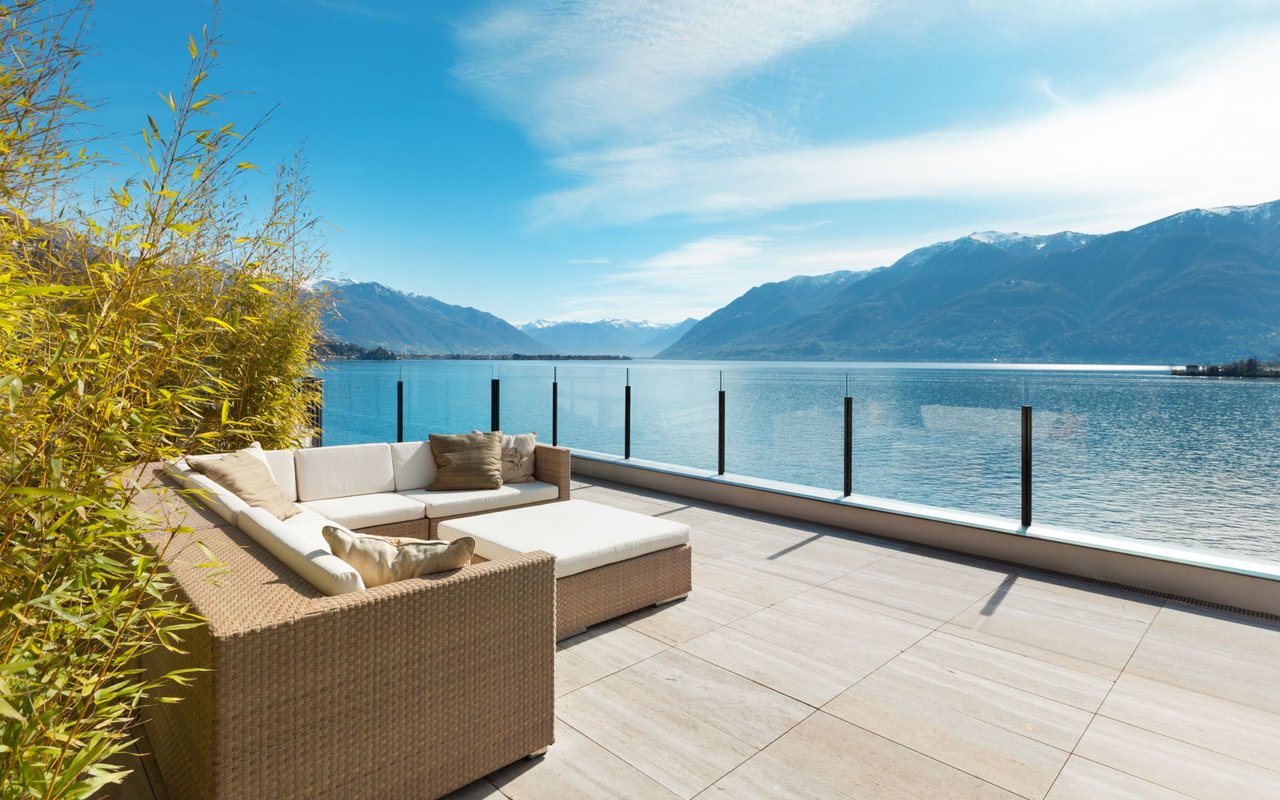
"One of the last remaining homesites at The Lookout." That's the actual language on the listing for Lot 388, a parcel with unobstructed lake views. It reads like a closing argument for urgency, and land scarcity is real here. But the more useful sentence for anyone comparing this neighborhood to others on Lake Chelan isn't about the lot count. It's about who signs the checks now.
The Lookout was planned as a roughly decade-long build-out, and by the numbers, it's landed almost exactly on schedule. What the marketing copy doesn't mention is that the same window that closed out the buildable inventory also closed out something else: developer control of the homeowners' association. In August 2025, governance of the HOA passed from the builder to a homeowner board. That handoff, not the lot count, is the thing worth pricing in before you write an offer on one of the last parcels.
The Decade the Build-Out Was Always Going to Take
When The Lookout was introduced as a concept community on Lake Chelan, the plan called for roughly 300 homes built out over about ten years, developed by the same team behind Seabrook on the Washington coast. Home prices at the time ranged from the low $400,000s past $1 million, and the pitch was straightforward: a walkable, New Urbanism-style vacation neighborhood with shared amenities doing double duty as both lifestyle and rental income.
A decade later, that timeline is showing up in the MLS. At least one active listing now describes its parcel as among the community's final homesites. That's not marketing hyperbole. It's the natural end of a phased development plan that was disclosed from the start. What it means practically is that the pool of available raw land at The Lookout is genuinely shrinking, and any lot that comes up from here forward is inventory the developer isn't making more of.
The Board That Changed Hands in August 2025
Here's the part that doesn't show up in a listing photo. The Lookout Owners' Association is a Washington nonprofit corporation, and for most of the community's life, it operated with the developer holding effective control, guiding budgets, setting dues and managing the buildout alongside the HOA's advisory structure. The association's own dues and FAQ page confirms that changed in August 2025, when governance turned over to the homeowners themselves, working through what the page calls the current HOA Advisory Board.
That's a normal, expected event in a build-out community. Developer-controlled HOAs are supposed to hand off to owners once a project matures. But it means the people now responsible for maintaining the marina, the two pools, the parks and the shared walking trails, and for funding the reserve account that pays for their eventual repair or replacement, are doing it for the first time. Washington's Homeowners' Association Act requires HOA boards to adopt an annual budget and provide it to members, and it separately requires a reserve account and funding plan for common-element upkeep. Those aren't new obligations created by the turnover. They're obligations a volunteer board is now meeting without a decade of institutional memory behind them.
The only dues figure the association has published is $490 a month, set for 2025, due on the 10th of each month. As of this writing, no updated 2026 rate has been made public. That's not unusual for a board in its first full budget cycle. It's also exactly the kind of gap a buyer should close with a direct question rather than an assumption, especially on one of the community's last lots, where the buyer is committing capital at the tail end of a development cycle rather than the middle of one.
Two Different Organizations Are Running This Neighborhood
The turnover only covers half of what makes The Lookout function day to day. The HOA governs common elements and dues. A separate, professionally staffed operation runs the resort side, including the Cottage Rental Program that many owners use to generate income from their second home. Understanding which is which matters more than most buyers realize.
| Function | Who runs it |
|---|---|
| Dues, reserve funding, common area upkeep | Homeowner-elected HOA board (as of August 2025) |
| Marina, pools, parks maintenance | Funded through HOA dues, executed by on-site staff |
| Cottage Rental Program (LOCR) bookings, marketing, housekeeping | Professional resort operations team |
| Marina slip assignment and pricing | Resort operations, separate from HOA governance |
The Cottage Rental Program has existed since 2014, uses an online reservations system and call center, and charges a published property management fee of 37 percent. That structure sits outside the HOA's new leadership entirely. A change in who sits on the association board doesn't touch who runs the rental program, negotiates its marketing, or sets its fee. If you're buying with rental income in mind, you're underwriting a relationship with the resort operator, not the HOA, and that relationship didn't change hands in 2025.
Worth noting: the most recent occupancy figures the operator has published date to 2021, when owners in the program used their homes an average of 43 nights a year and collected 92 nights of paid rental income. Those numbers haven't been refreshed publicly in five years. That's a reasonable thing to ask about directly rather than assume still holds.
What the Marina Numbers Actually Tell You
The Lookout's marina has 70 slips, 40 of them deep water and usable year-round. But the pricing depends entirely on which side of the transaction you're standing on. Owners securing a long-term deep-water slip pay $3,000 to $3,250 a year for a 22 or 28-foot berth. The community's published guest rate for Cottage Rental Program visitors, by contrast, runs $25 a day, $150 a week, or $975 for a full year of short-term access. Those aren't competing prices for the same product. They're two different products serving two different buyers, one built for owners who want a reserved spot they control all year, the other for renters and guests who need access for the length of a stay.
That distinction matters for a lot buyer specifically. A homesite purchase doesn't come bundled with a marina slip. Slip access, at either price tier, is a separate transaction, and with 40 deep-water berths serving a community approaching its final build-out, availability is worth confirming before it becomes an assumption baked into your closing budget.
Reading the Current Numbers on the Ground
As of the trailing six months through May 2026, single-family homes sold in The Lookout carried a median price of $1,087,500, on a median size of 2,248 square feet, or roughly $483 a square foot. The neighborhood typically sees about seven home sales a year, and 19 homes were active on the market at that time. That's a thin trading environment. Seven sales a year means the board setting next year's budget is doing so with a small, slow-turning pool of owners casting votes, not a large stabilized membership with years of comparable decisions behind it.
Individual listings tell the rest of the story. One active listing, a fully furnished vacation rental called Summersalts, advertises gross rental revenue north of $150,000. That figure has nothing to do with the HOA turnover, but it illustrates what's actually being bought and sold here: not just a lot or a house, but a slice of an income-generating system that two separate organizations now jointly administer.
Property taxes add a concrete, checkable number to the math. The Lookout's own ownership materials cite a rate of $9.02 per $1,000 of assessed value, meaning a $450,000 property carries roughly $4,059 a year in property tax, before HOA dues or rental program fees enter the picture.
Before You Write an Offer on One of the Final Lots
- Ask the HOA board directly for the 2026 budget and dues figure, since the only public number on record is the 2025 rate of $490 a month.
- Request the current reserve study or funding plan, since Washington law requires one and a first-year board's approach to it is worth seeing in writing.
- Confirm marina slip availability and current waitlist status separately from the lot or home purchase.
- If rental income is part of your plan, get the Cottage Rental Program's current occupancy and revenue data in writing rather than relying on the 2021 figures still published on the community's site.
- Ask whether any short-term rental permit on the property transfers, and if so, through what date.
- Verify whether the parcel or home is inside the Vineyard District, since amenities like the covered winter pool are tied to specific districts within the community.
FAQ
Does buying one of the last homesites include a marina slip? No. The marina's 70 slips, including 40 deep-water berths, are assigned and priced separately from lot or home purchases. Owners pay $3,000 to $3,250 a year for a deep-water slip, and availability should be confirmed independently of your purchase.
Will HOA dues increase now that owners run the board? That hasn't been publicly answered yet. The only published rate is $490 a month for 2025. Buyers should request the current draft budget and reserve study rather than assume continuity with the prior developer-set rate.
Is the Cottage Rental Program part of the HOA? No. The HOA, now homeowner-controlled, governs dues, reserves and common areas. The Cottage Rental Program is run by the resort's professional operations team, charges a published 37 percent management fee, and didn't change hands in the 2025 turnover.
If you're weighing one of The Lookout's final homesites against other options on the lake, the scarcity story is only half the picture. The governance story, and what a first-year homeowner board decides to do with dues, reserves and long-term maintenance, deserves equal weight before you sign. I've spent years tracking how these communities function once the developer steps back, and I'm glad to walk through the specific diligence questions for any lot or listing you're considering. Reach out to Nick Bowler and let's connect.
This article is general information, not legal, tax or financial advice. Consult a qualified professional about your situation.