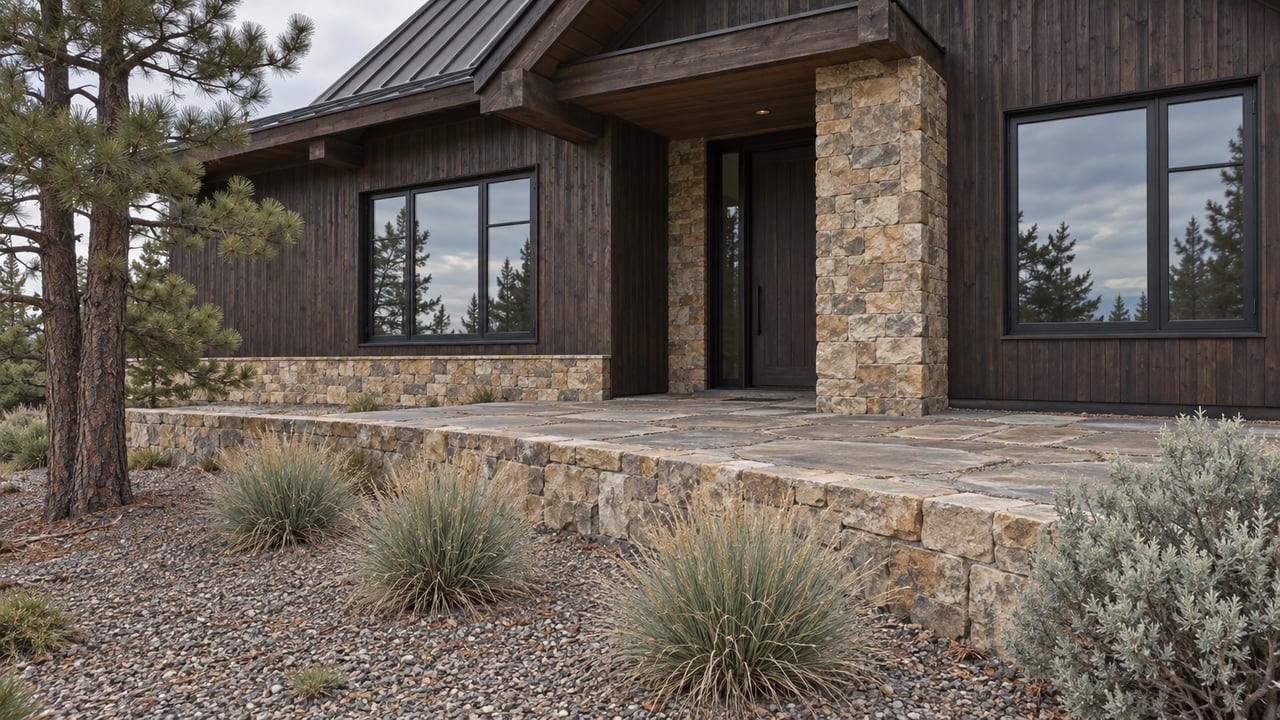
Chelan County's short-term rental program hits a hard deadline this week. Under the county's current rules, an existing STR permit has been able to follow a property from one owner to the next. After September 26, 2026, that stops. A permit expires the moment the property sells, and the buyer has to apply for a new one, in a system where several unincorporated zip codes have already exceeded the county's cap on rental units. Sellers who have spent years marketing a South Shore property as a turnkey income rental are watching that pitch lose its punch in real time.
None of this touches Marita's Vineyard Estates.
The 21-lot gated community west of the junction of Highways 97A and 971, on the stretch of Chelan's South Shore known locally as the Golden Mile, never entered the county's permit system to begin with. Its own covenants prohibit short-term rentals outright, a restriction written into the CC&Rs rather than tied to any county cap, tier, or annual renewal window. A buyer here was never counting on nightly rental income as part of the ownership math, so the deadline reshaping the rest of unincorporated Chelan County is simply irrelevant to a lot inside this particular gate.
That distinction is easy to skim past on a listing sheet. Inside a small, still-building enclave, it is closer to the whole story of who buys here and why.
What Changes at the County Level This Week
Chelan County's short-term rental program treats a rental permit as a license attached to an owner, not a deed. Each unincorporated zip code and urban growth area gets a cap, generally six percent of the total housing stock, and once a zip code hits that number, new applications stop until the count drops. The county opens one application window a year, between June 1 and July 31, for permits that take effect the following year.
Transfers have historically softened the edges of that system. A seller with a valid permit could pass it to a buyer, subject to county sign-off, which meant a permitted rental held extra value on the open market. That mechanism ends after September 26, 2026. From that date forward, a sale kills the permit. The next owner starts over, and in a capped zip code, starting over may mean not getting a permit at all.
| Before September 26, 2026 | After September 26, 2026 | |
|---|---|---|
| Existing STR permit on sale | Transfers to buyer with county approval | Expires; does not transfer |
| New owner's options | Continue operating under transferred permit | Must apply fresh, subject to zip code cap |
For anyone shopping a permitted rental elsewhere in the county, that table is the whole negotiation right now. For a Marita's Vineyard buyer, it never was.
A Covenant, Not a Permit
The difference is structural. A county STR permit is an administrative license, created by ordinance and adjustable by the Board of County Commissioners. The rules around it have already changed once, in 2021, and are changing again this year. A recorded HOA covenant works differently. It runs with the land, binds every lot owner in the plat, and changes only through the amendment process spelled out in the association's own bylaws, not through a county hearing.
Marita's Vineyard Estates chose the covenant route. The restriction on short-term rentals sits alongside other CC&R provisions covering construction quality, meant to protect long-term property values inside the gate. Buyers here are also working with an unincorporated Chelan County address, which brings a lower tax rate than an in-city parcel, another piece of the ownership math that has nothing to do with the county's rental caps.
The practical result is that a Marita's Vineyard owner isn't watching a countywide deadline to see whether their investment case still works. The case was built without a rental permit in it from day one.
Twenty-One Lots, Most Still Waiting on a Foundation
This is a small community, not a finished one. The plat holds 21 estate lots, each roughly a third of an acre, running from about 12,000 to 18,000 square feet, with views of Lake Chelan, the surrounding mountains, or the vineyards that give the community its name. Recent listing activity has shown roughly a dozen of those 21 lots on the market at the same time, a mix of numbered parcels along the private, sidewalk-lined street inside the gate. That is not the footprint of a mature neighborhood with the occasional resale. It's a build-out still in progress.
Site work on the available lots is largely finished before a buyer ever puts a shovel in the ground. Grading and soil compaction have been completed and certified, storm drain stub-ups are engineered and in place, and domestic water, sewer, power, and fiber are already stubbed to each lot line, along with a private irrigation connection. Fire hydrants sit throughout the plat, served by Chelan County Fire & Rescue District 7. For a builder, that removes a category of upfront cost and uncertainty that raw land elsewhere in the valley still carries.
What the Restriction Actually Buys
Walk or cycle from the gate and the destinations are the ones an owner uses, not a renter cycling through for a long weekend. Fielding Hills, Siren Song, Callan, and Karma wineries sit along the same South Shore corridor. Sunshine Market and Even Keel are within walking distance for everyday errands. Pat & Mike's drive-in is a short trip up the road for something simple. None of that changes whether the lot next door is occupied by an owner who lives there part of the year or one who is gone every other week.
That consistency is the other half of the trade. A property that can never be rented nightly also never generates the turnover that comes with one. There's no biennial fire inspection tied to an STR permit renewal, no annual county renewal fee, no exposure to a permit that might not survive a future sale. The tradeoff is straightforward: an owner gives up a revenue stream in exchange for a neighborhood that behaves the same way in year three as it did in year one.
The Trade to Weigh Before Writing an Offer
For a buyer who wants a South Shore lot with an eye toward covering carrying costs through nightly rentals, Marita's Vineyard Estates isn't that lot, and no change to county policy is going to make it one. The HOA closed that door with a covenant, not a permit, and covenants don't sunset on a county calendar.
For a buyer whose plan is a primary or vacation home they intend to actually use, construction-ready infrastructure, gated privacy, and a fixed rental restriction that applies to every neighbor equally are the point, not the limitation.
FAQ
Does the county's September 26, 2026 deadline affect homes already built in Marita's Vineyard Estates? No. The community's CC&Rs already prohibit short-term rentals, so there was never a county STR permit attached to these lots for the deadline to touch.
Could the HOA reverse the short-term rental restriction later? Any change would go through the association's own amendment process among lot owners. It isn't something the county's STR ordinance, current or future, has authority over.
How many of the 21 lots are still available? Listing activity in recent months has shown roughly a dozen of the community's 21 lots on the market at once, which means the build-out is ongoing rather than finished.
If you're weighing a South Shore lot against the county's shifting rental rules, or trying to figure out what a covenant like this means for your specific plans, I'd rather walk through it with you before you write an offer than after. Reach out to WaterfrontChelan.com and let's talk through what Marita's Vineyard Estates actually fits.